

Elizabeth Warren Hints at Other Documents Claiming Native American Heritage

6:02

Was the US attack on Iran the right thing to do?
Total Voters: 31
 Loading ...
but most will likely go to legal fees , and the amount claimed is inadequate . My losses alone would amount to about 10% of the award , and I am sure there are more than ten people who were damaged by the manipulation .
We must not question Jamie Dimon’s ( SP ??) multimillion dollar bonuses , you know .
I think JPM played the game best . Play the futures , pushing physical ever lower , make money on the older , higher priced contracts , while accumulating HUGE amounts of cheap silver . Until the mining company CEO’s withhold production for a few months , the game will continue .
Monday taketh away. No stopping the strong dollar
Metals Guy – I didn’t receive that email
NOTICE OF PROPOSED CLASS ACTION SETTLEMENTS
Gold and Silver Market Instrument Canadian Class Action Settlements
PLEASE READ THIS NOTICE CAREFULLY AS IT MAY AFFECT YOUR LEGAL RIGHTS
To All Persons or Entities Who, Between January 1, 2004 and March 19, 2014, Transacted in a Gold Market Instrument*, or Who, Between January 1, 1999 and August 14, 2014, Transacted in a Silver Market Instrument**, in Whole or in Part in Canada, Either Directly or Indirectly through an Intermediary, and/or Purchased or Otherwise Participated in an Investment or Equity Fund, Mutual Fund, Hedge Fund, Pension Fund or Any Other Investment Vehicle that Transacted in a Gold Market Instrument or Silver Market Instrument.
*Gold Market Instrument includes gold bullion or gold bullion coins, gold futures contracts traded on an exchange operated in Canada, shares in gold ETFs, gold call options traded on an exchange operated in Canada, gold put options traded on an exchange operated in Canada, over-the-counter gold spot or forward transactions or gold call options, over-the-counter gold put options, leases for gold, and gold certificates.
**Silver Market Instrument includes silver bullion or silver bullion coins, silver futures contracts traded on an exchange operated in Canada, shares in silver ETFs, silver call options traded on an exchange operated in Canada, silver put options traded on an exchange operated in Canada, over-the-counter silver spot or forward transactions or silver call options, over-the-counter silver put options, leases for silver, and silver certificates.
This notice is about class actions relating to Gold Market Instrument and Silver Market Instrument transactions.
In the Gold Market Instrument action, the plaintiffs, Julius Di Filippo and David Caron, in Ontario, and the plaintiff, Patrick Benoit, in Québec, have undertaken legal procedures under applicable laws related to class actions against the following defendants: The Bank of Nova Scotia, ScotiaMocatta, Scotia Capital (USA) Inc., Barclays PLC, Barclays Bank PLC, Barclays Capital Canada Inc., Barclays Capital Inc., Barclay Capital PLC, Deutsche Bank AG, Deutsche Bank Securities Limited, Deutsche Bank Securities, Inc., HSBC Bank PLC, HSBC Holdings PLC, HSBC Bank Canada, HSBC Securities (Canada) Inc., HSBC USA Inc., HSBC Securities (USA) Inc., London Gold Market Fixing Ltd., Société Générale, Société Générale (Canada), Société Générale SA, SG Americas Securities, LLC, UBS AG, UBS Bank (Canada) and UBS Securities LLC.
In the Silver Market Instrument action, the plaintiffs, Julius Di Filippo and David Caron, in Ontario, and the plaintiff, Raymond Ayas, in Québec, have undertaken legal procedures under applicable laws related to class actions against the following defendants: The Bank of Nova Scotia, La Banque de Nouvelle-Ecosse, ScotiaMocatta, Scotia Capital (USA) Inc., Barclays PLC, Barclays Bank PLC, Barclays Capital Canada Inc., Barclays Capital Inc., Barclay Capital PLC, Deutsche Bank AG, Deutsche Bank Securities Limited, Deutsche Bank Securities, Inc., HSBC Bank PLC, HSBC Holdings PLC, HSBC Bank Canada, Banque HSBC Canada, HSBC Securities (Canada) Inc., HSBC USA Inc., HSBC Securities (USA) Inc., The London Silver Market Fixing Limited, UBS AG, UBS Bank (Canada), Banque UBS (Canada) and UBS Securities LLC.
The actions are brought on behalf of all persons or entities who, between January 1, 2004 and March 19, 2014, transacted in a Gold Market Instrument, or who, between January 1, 1999 and August 14, 2014, transacted in a Silver Market Instrument, in whole or in part in Canada (or in whole or in part in Québec for the Québec action), either directly or indirectly through an intermediary, and/or purchased or otherwise participated in an investment or equity fund, mutual fund, hedge fund, pension fund or any other investment vehicle that transacted in a Gold Market Instrument or Silver Market Instrument.
Excluded from the classes are the defendants, their parent companies, subsidiaries, and affiliates. A Gold Market Instrument includes gold bullion or gold bullion coins, gold futures contracts traded on an exchange operated in Canada, shares in gold ETFs, gold call options traded on an exchange operated in Canada, gold put options traded on an exchange operated in Canada, over-the-counter gold spot or forward transactions or gold call options, over-the-counter gold put options, leases for gold, and gold certificates. A Silver Market Instrument includes silver bullion or silver bullion coins, silver futures contracts traded on an exchange operated in Canada, shares in silver ETFs, silver call options traded on an exchange operated in Canada, silver put options traded on an exchange operated in Canada, over-the-counter silver spot or forward transactions or silver call options, over-the-counter silver put options, leases for silver, and silver certificates.
WHAT ARE THE SETTLEMENT BENEFITS?
Settlements have been reached with Deutsche Bank AG, Deutsche Bank Securities Limited, and Deutsche Bank Securities, Inc. (collectively, “Deutsche Bank”) (the “Settlement Agreements”). The Settlement Agreements, if approved and their conditions fulfilled, will settle, extinguish and bar all claims relating in any way to or arising out of the proceedings against Deutsche Bank.
If the Settlement Agreements are approved, Deutsche Bank has agreed to pay $3,350,360.95 in respect of the Gold Market Instrument action and $2,121,939.05 in respect of the Silver Market Instrument action (the “Settlement Amounts”) to settle the class actions and to provide co-operation to the plaintiffs in order to continue the cases against the other defendants. The settlement is a compromise of disputed claims, and Deutsche Bank does not admit any wrongdoing or liability.
At this time, the Settlement Amounts will not be distributed to the classes. Rather, the Settlement Amounts, after deduction of court-approved fees and disbursements, will be paid into an interest bearing account for the benefit of the classes for distribution at a future date.
WHAT IS THIS CASE ABOUT?
These class actions allege that beginning at least as early as 2004 and continuing through March 2014, the defendants conspired with each other to fix prices for Gold Market Instruments, and that beginning at least as early as 1999 and continuing through August 2014, the defendants conspired with each other to fix prices for Silver Market Instruments. It is alleged that the defendants communicated directly with each other to coordinate their: (i) fixing of spot prices; (ii) manipulating of the bid-ask spreads; (iii) controlling or manipulating of benchmark rates; and (iv) exchanging of confidential customer information. It is alleged that the defendants’ conduct impacted the price of Gold Market Instruments and Silver Market Instruments, and that the defendants profited directly, at the expense of the classes, by having control and advanced knowledge of the movements in price of Gold Market Instruments and Silver Market Instruments.
ARE YOU INCLUDED?
You are included in these class actions if:
· you are a person or entity who, between January 1, 2004 and March 19, 2014, transacted in a Gold Market Instrument[1], or who, between January 1, 1999 and August 14, 2014, transacted in a Silver Market Instrument[2], in whole or in part in Canada, either directly or indirectly through an intermediary, and/or purchased or otherwise participated in an investment or equity fund, mutual fund, hedge fund, pension fund or any other investment vehicle that transacted in a Gold Market Instrument or Silver Market Instrument.
[1] “Gold Market Instrument” includes gold bullion or gold bullion coins, gold futures contracts traded on an exchange operated in Canada, shares in Gold ETFs, gold call options traded on an exchange operated in Canada, gold put options traded on an exchange operated in Canada, over-the-counter gold spot or forward transactions or gold call options, over-the-counter gold put options, leases for gold, and gold certificates.
[2] “Silver Market Instrument” includes silver bullion or silver bullion coins, silver futures contracts traded on an exchange operated in Canada, shares in silver ETFs, silver call options traded on an exchange operated in Canada, silver put options traded on an exchange operated in Canada, over-the-counter silver spot or forward transactions or silver call options, over-the-counter silver put options, leases for silver, and silver certificates.
WHO ARE THE LAWYERS WHO REPRESENT THE CLASSES?
The law firms of Sotos LLP, Koskie Minsky LLP, Siskinds LLP, and Camp Fiorante Matthews Mogerman represent the plaintiffs and the classes in the Ontario actions and Siskinds Desmeules, s.e.n.c.r.l. represents the plaintiffs and the classes in the Québec actions (“Class Counsel”). The lawyers will be paid on a contingency fee basis.
HEARINGS TO APPROVE SETTLEMENT AGREEMENTS AND CLASS COUNSEL FEES
Hearings will be held during which Class Counsel will seek the court’s approval of (i) the Settlement Agreements; and (ii) the fees and expense reimbursement of Class Counsel (the “Approval Hearing”). The hearing before the Ontario Superior Court of Justice will be held on April 30, 2019 at 10:00AM (ET) at Osgoode Hall, 130 Queen Street West, Toronto, Ontario. The hearing before the Québec Superior Court will be held on June 17, 2019 at 9:30AM (ET) at the Montreal Courthouse, 1 Notre Dame Street East, Montreal, Québec.
At the Approval Hearings, the courts will determine whether the Settlement Agreements are fair, reasonable and in the best interest of the classes. At the hearings, Class Counsel will also seek court approval of its request for fees equal to 25% of the Settlement Amounts and expense reimbursement. Class Counsel has not been paid as the matters have proceeded, and has arranged for funding of the out-of-pocket expenses of conducting the litigation. Class Counsel will be requesting that the fees and disbursements be deducted directly from the Settlement Amounts.
Any member of the proposed classes may attend the Approval Hearings and may ask to make submissions regarding the proposed settlements. Persons intending to object to the Settlement Agreements or Class Counsel’s fees and expenses should provide their objection in writing to Class Counsel at the address below no later than April 12, 2019.
WHAT ARE YOUR OPTIONS?
Stay in the(these) Class Action(s) and Do Nothing:
You do not have to do anything to stay in the(these) class action(s). If any benefits, including any settlement funds, become available for distribution to the classes, you will be notified about how to ask for a share. You will be legally bound by all orders and judgments of the court, and you will not be able to sue the defendants about the legal claims in these cases.
Stay in the(these) Class Action(s) and Object to the Settlement Agreement or Class Counsel’s Fees and Expenses:
If you want to object to the proposed Settlement Agreements with Deutsche Bank or to the payment of Class Counsel’s fees and expenses, you should do so by setting out your objection in writing addressed to the Class Counsel at the address below.
Get Out of the(these) Class Action(s):
If you want to keep your right to sue the defendants on your own over the claims in these cases, you need to opt out or remove yourself from this(these) class action(s). If you remove yourself, you cannot get any compensation or other benefits from these class actions. If you want to be removed, you must complete and send an Opt Out Form (see attached) to info@preciousmetalsclassactions.ca or Nelson P.O. Box 20187 – 322 Rideau Street, Ottawa ON, K1N 5Y5 no later than April 12, 2019. Residents of Québec must also send their Opt Out Form to the Clerk of the Superior Court of Québec located at 1, rue Notre-Dame Est, Montréal, Québec, H2Y 1B6, no later than April 12, 2019. Opt Out Forms are also available at www.preciousmetalsclassactions.ca. You may choose to opt out of the Gold Market Instrument class action, the Silver Market Instrument class action, or both.
Please note that after April 12, 2019 no further right to opt out of this(these) actions will be provided. However, if there are further settlements in this(these) action(s), you will be given an opportunity to oppose such settlements or the payment of Class Counsel’s fees and expenses at that time if you wish to do so.
MORE INFORMATION?
Go to www.preciousmetalsclassactions.ca, call toll-free 1-833-414-8040, email info@preciousmetalsclassactions.ca or write to Class Counsel at Nelson P.O. Box 20187 – 322 Rideau Street, Ottawa ON, K1N 5Y5.
Interpretation
If there is a conflict between the provisions of this notice and the Settlement Agreements, the terms of the Settlement Agreements will prevail with respect to Deutsche Bank.
DISTRIBUTION OF THIS NOTICE HAS BEEN AUTHORIZED BY THE ONTARIO SUPERIOR COURT OF JUSTICE AND BY THE QUÉBEC SUPERIOR COURT
The Real Reason the Government Wants You to Drive an Electric Car
By Jeff Brown, Editor, The Near Future Report
Jeff Brown
By now, most consumers are aware of the growing trend of electric vehicles (EVs).
According to the Paris-based International Energy Agency (IEA), 125 million electric vehicles will be on the road by 2030. That’s up from an estimated 3.1 million in 2017.
And according to a 2018 survey from the American Automobile Association (AAA), roughly 20% of Americans are considering going electric for their next car purchase.
I’ve even outlined this growing trend to readers of my Near Future Report. [Subscribers can catch up here.]
And the adoption of this technology has been aggressively pushed by governments. In the U.S. alone, government subsidies for electric vehicles have been estimated as high as $20 billion.
But the push to migrate from internal combustion engine (ICE) vehicles to electric vehicles isn’t what most think.
There’s a deeper story here…
Popular Motivation
The most popular motivation used by both consumers and governments is a simple one… EVs are better for the environment. They produce less, or no, pollution.
Sadly, this is a logical fallacy.
Taken out of context, yes, an electric vehicle produces less pollution than an ICE vehicle. Or does it?
The answer lies in a simple question that is rarely ever asked… where does the electricity come from?
Take a state like California. According to the California Energy Commission, 61.6% of energy used in the state comes from coal (fossil fuel), large hydro projects (damages natural habitats of freshwater rivers and lakes), natural gas (fossil fuel and California’s largest individual power source), and nuclear energy (radioactive waste). And only 29% comes from renewable sources, two-thirds of that being solar and wind.
That means nearly 62% of the electricity used to power an EV in California comes from fossil fuels and energy sources that are highly destructive to the natural environment.
Surprising, isn’t it?
And California is one of the best states in the country for generating renewable energy due to its sunny and, in some places, also windy climate.
Look at a state on the other coast, New York. The New York Times reports that 94% of its energy comes from natural gas (37%), nuclear (33%), and large hydro projects (23%).
That’s right, 70% of the electricity fueling an EV in the state of New York is “burning” carbon or a form of nuclear power.
My point is that EVs are only as clean as the energy used to fuel them.
So, if saving the environment isn’t the real motivation for the adoption of EVs, then what is?
Flooded Market
As I’ve shown Diary readers in the past, one of the main advantages is that EVs are less complex vehicles.
Consider this: The average ICE car has 2,000 moving parts. The EV equivalent has just 20. That’s just 1% of an average ICE. Incredible right?
As a result, EVs break down less often and are much cheaper to maintain. This makes them attractive to both automobile manufacturers and to consumers.
EVs also represent an attractive opportunity for automotive manufacturers because the market for ICE vehicles is so flooded.
More specifically, carmakers hoping to sell a new automobile have to compete with used cars. After all, a well-maintained used car can still accomplish the principle task of getting you where you need to go. But it comes at a significant discount.
In the case of EVs, a fairly new market for cars, there just aren’t that many used cars on the market. The market for EVs is pretty much a greenfield opportunity.
It is the opportunity for profit, not concern for the environment, that motivates automakers to pursue EVs.
But what about government motivations for EVs? What has the incentive been to stimulate this industry?
Orwellian Possibility
Governments typically tell the public that the EV subsidies are for environmental reasons. It’s a simple explanation, but that’s not the whole truth…
Many governments have offered economic incentives like discounted pricing or tax rebates to encourage consumers to buy these new EVs.
There is certainly a hope that these kinds of incentives will become a catalyst for domestic corporations to invest in the technology, create new jobs, and hopefully manufacture these new EVs locally and thus stimulate the economy.
And there is plenty of truth to that, especially in markets that have existing automobile manufacturing plants.
But what if we step back further, and think even bigger picture?
Consider that the next evolution of EVs will be self-driving cars. EVs tend to be designed much more like upgradeable computers than traditional ICE vehicles.
Tesla is a perfect example. Software updates are pushed out to Teslas around the world, several times a year, to “upgrade” the cars.
Oftentimes, those software updates are new performance features for the car, like the self-driving functionality.
Why would a government push for the mass adoption of remotely-connected, self-driving cars? There are some very Orwellian possibilities that many are not considering.
Real Motivations
Self-driving cars must always be connected to a network. Tesla’s EVs connect to its network over 4G wireless networks today, which will become 5G wireless networks beginning this year.
The government will know the location of every self-driving car at all times. And with the right authority, a self-driving car could be rerouted to a government’s choice of location at any time.
For example, what if someone suspected of a crime was trying to “drive” out of state? The local government could simply reroute the car to the nearest police station.
And there’s something else…
Consider Waymo, the self-driving division of Alphabet, the parent company of Google.
I always get a kick out of articles that claim Waymo’s motivation is to become a manufacturer of self-driving cars…
Google’s motivation is simple: It wants to collect as much data as possible about consumers and sell that data to whoever will pay for it.
Think about it. According to the U.S. Department of Transportation, the average American driver spends about an hour a day in a car.
In a world where cars and taxis drive themselves, that frees up an hour of time to look at a screen, surf the internet, watch videos… and you guessed it… look at ads that are served to you.
Google is spending so much time and money on research and development on autonomous driving technology so that it can license that technology to car manufacturers in exchange for being able to retain, and sell, the data that it collects. Plain and simple.
Force for Good
Now, I don’t want to give you the impression that I’m negative on new technological developments. Far from it. As many of you know, I’ve devoted my entire adult life studying, working in, and investing in bleeding edge technology.
And as I’ve told my readers time and time again, our lives are about to improve exponentially in the coming years thanks to new technology.
Self-driving electric vehicles are a tool. And like any tool, they can be used for good… or bad.
Understanding the less obvious motivations in the world of technology is a critical part of my research process. It informs better investment recommendations to my readers.
By looking beyond the “official reasons,” I’m able to better understand the direction of important technology trends.
And now, so can you…
Regards,
Jeff Brown
Editor, The Near Future Report
That’s our circulating low pressure storm… like a low intensity hurricane. It’s bringing monster high surf to North and West shores and high winds to the islands. Supposed to be peaking this evening, although it’s a beautiful, if a little breezy, day in Hilo today. Sunshine and blue skies. I think Honolulu and Oahu island are getting some rain bands.
hey ! what’s that thing just north of the islands ???
earth.nullschool.net
click on earth and about to get nomenclature
If gold closes above $1400. on the monthly, $1800-1900 is the next stop. The only problem is the very significant resistance at the $1380-1400 area. JNUG and Comex gold appear to have legs this time up.
rno
Well I’m lazy do I qualify for some free stuff?
I’m just asking…

Occasional-Cortex… the Congress-child chews on her foot for awhile.
Free Money for those ‘unwilling to work’! GIMME SUMMA DAT!
21. Okay, so thieves, Smithsonian curators, reporters, limo drivers, kids, all these people loved Mr. Rogers, but someone has to hate him, right? Well, LSU professor Don Chance certainly doesn’t love his legacy: He believes that Mr. Rogers created a, “culture of excessive doting” which resulted in generations of lazy, entitled college students… and that makes sense, because generally the deterioration of culture can be traced back to a single public television program.
WOW! that is amazing. Thanks Italy! I love my President! pic.twitter.com/jrBspn0n4G
— FindingTheTruth?????? (@DebbieRebG) February 10, 2019
11.44 minutes of well rounded valuable info and ending with good advice.
Why have safe haven assets performed so well in the face of surging equities and corporate debt? Because current Market Structure is inherently unstable and increasingly prone to an accident. Today’s buyers of Treasuries, bunds and JGBs are less concerned with January/Q1 equities and junk bond returns, keenly focused instead on acute global market instabilities and the inevitability of a systemic market liquidity event. I would further argue that this dysfunctional market dynamic recalls the destabilizing rally in Treasuries and agency securities in 2007 and well into 2008. This market anomaly stoked end-of-cycle speculative Bubble excess and exacerbated systemic fragilities.
When risk markets advance, news and analysis invariably focus on the positives – an expanding U.S. economy, prospects for a trade deal with China, buoyant profits, a backdrop of ongoing exciting technological advancements, perpetual low interest rates, endless loose financial conditions, etc. With markets advancing, mounting risks are easily disregarded. “Deficits don’t matter.” Debt concerns are archaic. Market Structure is a nothing burger. Best to ignore escalating social, political and geopolitical risks. The unfolding clash between the U.S. and the rising China superpower – it’s nothing. An increasingly fragmented and combative world – ditto.
As we saw in December, sinking markets direct attention to an expanding list of troubling developments. Years of inflating securities prices seemed to demonstrate that so many of the old worries were unjustified – none really mattered. The problem is that many do matter – and some tremendously. The current extraordinary backdrop has all the makings for a decisive bearish turn in market sentiment that would create a problematic feedback loop within the real economy – domestically and globally.
I’ll highlight an issue that has come to be easily dismissed – yet matters tremendously. Zero rates and QE were a policy experiment. The consensus view holds that the great success of this monetary exercise ensures that QE is now a permanent fixture in the central banking “tool kit”. The original premise of this experiment rested on the supposition that a temporary boost of liquidity would stimulate higher risk market prices and risk-taking with resulting wealth effects that would loosen financial conditions while stimulating investment, spending and income growth throughout the real economy. The expectation was that a shot of stimulus would return the real economy back to its long-term trajectory.
History teaches us that monetary inflations are rarely temporary. Travel down that road and it’s nearly impossible to get off. Dr. Bernanke, the Federal Reserve and global central bankers never contemplated what a decade of unending monetary stimulus would do to Market and Financial Structure. Most – in policy circles and the marketplace – believe beyond a doubt that monetary stimulus was hugely successful in resuscitating economic growth dynamics.
http://creditbubblebulletin.blogspot.com/2019/02/weekly-commentary-delusional.html
With “risk on” back on track, why then would “safe haven” bonds be attracting such keen interest? German 10-year bund yields sank eight bps this week to nine bps (0.09%), the low going back to October 2016. Two-year German yields were little changed at negative 0.58%. Ten-year Treasury yields declined five bps this week to 2.64%, only nine bps above the panic low yields from January 3rd. Japanese 10-year yields declined another basis point this week to negative three bps (negative 0.03%), only about a basis point above January 3rd lows. Swiss 10-year yields declined six bps this week to negative 0.33% – the low since October 2016.
So, who’s got this right – risk assets or the safe havens? Why can’t they both be “right” – or wrong? There is much discussion of a confused marketplace: extraordinary cross-currents leaving traders confounded. In search of an explanation, I’ll point to the consequences of Monetary Disorder.
It has now been a full decade of near zero interest rates globally. Trillions (estimates of around $16 TN) of new central bank “money” were injected into global securities markets. What’s more, global central banks have repeatedly intervened to buttress global markets – from 2008/09 crisis measures; to 2012’s “whatever it takes”; to 2016’s “whatever it takes to support a faltering Chinese Bubble”; to last month’s Powell U-turn. The combination of a decade of artificially low rates, an unfathomable amount of new market liquidity and an unprecedented degree of central bank market support have fostered momentous market structural maladjustment. We’re living with the consequences.
It is certainly not easy to craft an explanation for today’s aberrant market behavior. I would start by positing that a massive pool of speculative finance has accumulated over this protracted cycle. There is at the same time liquidity excess, excessive leverage and the proliferation of derivatives strategies (speculation and hedging). In short, there is trend-following and performance chasing finance like never before – keenly fixated on global monetary policies. Illiquidity lies in wait.
When this mercurial finance is flowing readily into inflating securities markets, the resulting conspicuous speculative excess pressures central bankers to move forward with “normalization” (Powell October 3rd). At the same time, this edifice of speculative finance is innately fragile.
http://creditbubblebulletin.blogspot.com/2019/02/weekly-commentary-delusional.html
I watched a vid of 5 helos landing kitty corner to a Wells building and exfil of soldiers carrying heavy stuff.
You know how much these simulations happen around real FF.
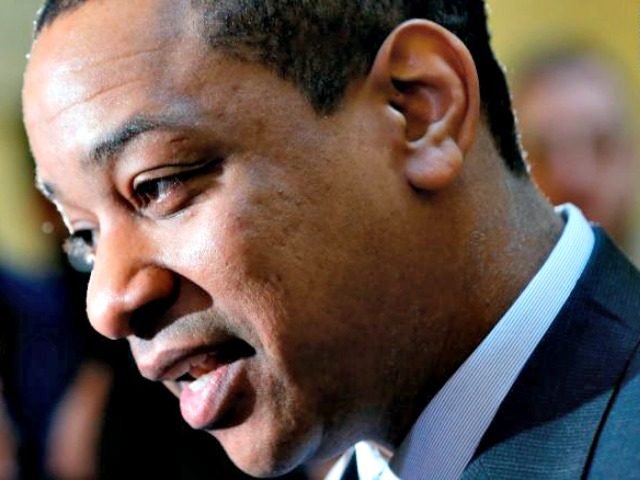
“On Monday, I will be introducing articles of impeachment for Lt. Governor Justin Fairfax if he has not resigned before then.,” Hope said in a statement shared to social media.
A second woman, Meredith Watson, has come forward to accuse Fairfax of sexual assault, alleging in a statement Friday that the attack took place when she and Fairfax were Duke University classmates in 2000. The allegation comes after California college professor Dr. Vanessa Tyson accused Fairfax on Wednesday of forcing her to perform oral sex on him in 2004 during the Democrat National Convention.
Contenders for the 2020 Democrat presidential nomination have begun to issue calls for the lieutenant governor of Virginia to resign. Sens. Cory Booker (D-NJ) and Kirsten Gillibrand (D-NY) were first among the expanding field to call for Fairfax’s resignation. Booker posted on Twitter that “the multiple detailed allegations against the Lt. Gov. of Virginia are deeply troubling” and called on Fairfax to leave office.
Gillibrand called details of the second woman’s claims “sickening and horrendous” and also called on Fairfax to step down, continuing:
This new allegation from Meredith Watson that Lt. Governor Justin Fairfax raped her, corroborated by at least two named individuals in interviews and emails, is sickening and horrendous. I believe Meredith Watson and Dr. Tyson, and it was extremely brave for them to come forward. Mr. Fairfax should resign and no longer serve the Commonwealth of Virginia
Former Virginia Gov. Terry McAuliffe (D) also called on Fairfax to step aside, urging for the embattled Virginia Democrat to do so right away.
Fairfax has vehemently denied the allegations and has called for an investigation into the claims. “The allegations against Justin Fairfax are serious and credible,” said McAuliffe. “It is clear to me that he can no longer effectively serve the people of Virginia as Lieutenant Governor. I call for his immediate resignation.”
The new accusation further clouds the fate of Virginia’s government. Fairfax would take over if Virginia Gov. Ralph Northam (D) were to resign over the racist photo that appeared on his medical school yearbook page. Northam told his top staff Friday that he would not resign. Virginia Attorney General Mark Herring (D), who is second in line of succession, admitted to putting on blackface in college.
We are at this point because of…
A Problem With Capitalism
What we have today isn’t really capitalism. The problem lies with the fact that what folks think is capitalism is this bastardised mongrel of a creature we’re left with which is crony capitalism.
And so just as folks in Venezuela are angry and calling for change so, too, folks are angry and calling for change in the Western world.
The problem lies in mistakenly taking the current crony capitalism to be capitalism and the increased inequality to be the result of capitalism rather than this crony capitalism that has only gathered momentum as the perpetrators have been emboldened by ever greater and outrageous acts.
No wonder they’re fed up with it!
And so it’s no surprise that folks who should know better have been moving towards the crazies.
OCD Oasico Cortez Demo
I like one of her quotes and targets many of them as well as some Repubs too. They don’t live in the district they represent.
It’s time we acknowledge that not all Democrats are the same. That a Democrat who takes corporate money, profits off foreclosure, doesn’t live here, doesn’t send his kids to our schools, doesn’t drink our water or breathe our air cannot possibly represent us.
Read more at:
Presently 1314 even.
