 Loading ...
Yeah I included that but antibiotics were and still are important. Even with sanitation as in clean water, food, including waste management et all a simple cut could kill them. That’s why they still make a big deal out of it in some places but a bigger deal then. But even today how many people in the US living today needed antibiotics somewhere in their lifetime despite sanitation, or would be alive today if they didn’t have it.
@goldielocks re Hecla
Roger that, I have 7950 shares of HL, it gets popular with rising Silver prices, so does CDE AG and even ASM and others. However my most profitable stock is AGI Alamos gold. It started climbing before all the others. However my non Gold stock, Smith & Wesson, SWBI, finally broke out lately.
Goldie
It wasn’t the antibiotics.
And it certainly wasn’t so-called immunizations or vaccinations.
It was improved sanitation and cleanliness. And nutrition.
Even today a healthy immune system is more important than antibiotics. But it has been impacted/destroyed by vaccinations, chemicals in our environment and farming, and food bred for shelf-life not nutrition and over-processed.
Vaccinations, and our ENTIRE medical ‘industry’, will be looked back on in the future like we look back at ‘medical’ practices in the 1800s. With mockery and disbelief.
End of discussion for me.
Buygold
I wonder what kind of lucrative deals are now going to be made in the US as a result of this further polarization Russia and now in the east with the EU and UK?
Mr Copper
They’re doubling down..lol
Major investors in the shares themselves.
According to data reported at the end of 2025, the largest institutional holders of Hecla Mining shares are:
 Quiver Quantitative +1
- BlackRock, Inc. (approx. 13%): Holding over 87 million shares, BlackRock is the largest stakeholder.
- Vanguard Group Inc (approx. 9.8%): Holding over 65 million shares.
- Van Eck Associates Corporation (approx. 5.5%): Holding over 37 million shares.
- State Street Corporation (approx. 4.8%): Holding over 32 million shares.
- Tidal Investments LLC (approx. 3.6%): Holding over 24 million shares.
Investing.com +4
Top Mutual Fund and ETF Holders
A significant portion of Hecla stock is held by specialized ETFs focused on silver and gold mining. Top holders include:
 Yahoo Finance Singapore +1
- Amplify Junior Silver Miners ETF (SILJ): ~3.6%
- VanEck Gold Miners ETF (GDX): ~3.3%
- iShares Core S&P Mid-Cap ETF (IJH): ~3.2%
- Vanguard Total Stock Market Index Fund (VTSAX): ~3.0%
- Global X Silver Miners ETF (SIL): ~2.4%
Other Notable Holders
- Geode Capital Management, LLC and Dimensional Fund Advisors LP also maintain significant positions.
- Insiders hold a relatively small portion of the company (approximately 0.62%), with notable sales occurring among executives in late 2025/early 2026.
- Public companies and retail investors own a combined total of roughly 28–39% of the shares
Buygold
I guess figuring out how to do that it find out what’s causing them to do that to other oil companied in the first place abd go from there.
The rest, this war is giving them no choice. Either that or starve.
Mr Copper
Well look here, just what I feared. Looks who’s got sudden interest in the miners drawing money to themselves.
Who are the major investors is the new ETF Hlxx.
Based on the provided search results from March 2026, the Tradr 2X Long HL Daily ETF (HLXX) is a leveraged ETF designed to track the daily performance of the Helix Energy Solutions Group, Inc. (HLX).
The major investors in this ETF are largely financial institutions, asset managers, and ETF providers that specialize in passive investing or high-volume trading. As of early 2026, top holders include:
- iShares (BlackRock): Frequently listed as a top institution holder.
- Vanguard Group: A major holder of the underlying assets and often involved in the ETF structure.
- Avantis (American Century Investments): Notable holders, particularly within their small-cap value funds.
- Dimensional Fund Advisors (DFA): Listed as a major holder of small-cap equity related to this space.
- State Street (SPDR): A major institution frequently holding high percentages of ETFs.
Morningstar +1
The ownership structure of this type of leveraged ETF is generally dominated by institutional investors and mutual funds that manage portfolio-level allocations.
Goldie
There was a post on X that said 23 countries are signing up to ensure safe passage in the strait of Hormuz. That should help. What has to stop are Iran’s an attacks on the other countries oil facilities. Not sure how they do that.
To me the biggest risk is the petrodollar. Japan and S. Korea doing transactions for oil in Yuan. Not good.
Ipso
The theory is the narrative, the excuse. If they cared about saving the children vs follow the money, they’d make them safe but their not. The theory could partially work if they were safe.
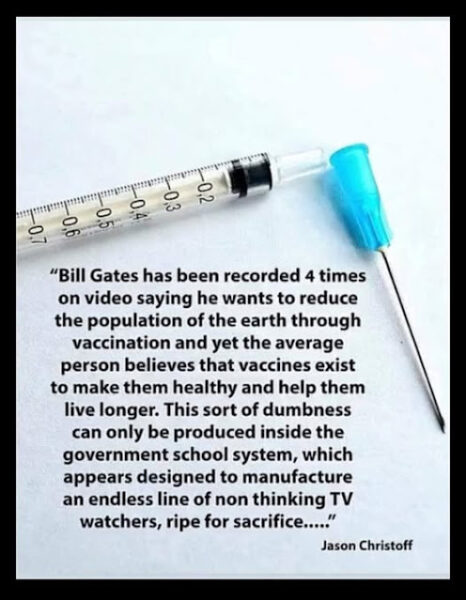
Just like this COVID vaxx. It was made by using the cold virus. Perfect they probably though. Why, because the virus ALWAYS morphs. What does that mean? It means they need to keep making more of them. During the initial outbreak they were having other manufactures to make them too and God knows what we’re in those. None of it was safe. They got their emergency okay so didn’t have to prove it was safe or be accountable. That’s why there was a war on Ivermectin and other treatments that were effective because it would take their emergency rights away if they had something safe that worked. It could only be used when there was no other alternative. Then the irony it didn’t even work. They already knew that even if it did work which it didn’t so wasn’t meant to work because the cold virus always morphs. Then they can hide the fact it doesn’t work saying it’s because it morphed.
For once If like to see them call out their threats they won’t make any more if their held accountable and tell them okay don’t until they are.
goldielocks
I was talking about “the theory.”
Beyond that I believe what you’re saying is true.
I’m out
Ipso
People who don’t question or do their homework it’s easy to believe a narrative instead of the truth. Just like this war going on. Especially when it comes from authority figures. Now that I said it see what happens.
People are made to believe it was vaccines that saved all these children today. Most European children already had inherited antibodies to childhood diseases. The bigger threat was the ones who were never exposed in the first place like the American Indians
The fact is it wasn’t the vaccines that saved the children, it was the recognition of bacteria and continued progress in modern medicine, food preservation and clean water. Places like third world and off grid still have these threats especially if they’re not aware of them.
… Before antibiotics, the biggest threats to children were infectious diseases like pneumonia, diarrhea, diphtheria, and tuberculosis, with infectious illnesses causing nearly 40% of all deaths in children under 5 in 1900. Bacterial infections often resulted in death, and simple, common infections were frequently fatal because no effective treatments existed.
Ipso
Re read what I said.
goldielocks re: Innocent Bill
If you believe that’s what happened I gotta bridge to sell you!
Ipso 11:20
There is a way out of that assumption that getting the birth rate down doesn’t necessarily mean to kill people although in reality because they refuse the spend the money to make the vaccines safe because they bribed and threatened the governments so they don’t have to. So we know while they get rich they don’t have the people’s best interest in mind. The theory is if the death rates go down from preventable diseases by vaccination the people will not need to have a bunch of kids in case some don’t survive. Not that I want to give them a excuse because I know their up to no good. Same for other threats that result in post population explosion, including war, like us the babyboomers.
Maddog
Of course, they want the west, their military and their wars out. They are already pushed to the east to exclude the west. However China the financial sectors don’t want the radical war groups over there either. More polarization while China moving forward with technology and AI employing their people while the greedy West with planning on buying up the destruction on the cheap and it planning on using it to UN employ the people in the west like penny pinching scavengers instead of economic movers and leaders.
Times of Israel has put out the Iranian answer…can’t link as u have to subscribe……
Iran is demanding:
1) reparations for attacks on it,
2) the lifting of all sanctions,
3) the closure of all US military bases in the Persian Gulf as conditions to end the war with the US and Israel,
4) Iran wants guarantees that the war won’t start up again,
5) a halt to Israel’s strikes on Iran’s Lebanese proxy Hezbollah.
6) Iran’s demands also reportedly include a new arrangement in the Gulf that will let the Islamic Republic collect tolls from ships that traverse the strategic Strait of Hormuz, through which a fifth of the world’s oil usually travels.
Meanwhile, Iran refuses to negotiate limits to its ballistic missile program, according to the Journal.
The Iranian conditions mentioned in the report do not address the country’s nuclear program.
The newspaper, (WSJ), cites a US official as saying Iran’s demands were ridiculous and unrealistic, and Arab and US officials as saying Iran’s stance makes the possibility of a deal even more remote than before the war.
Buygold
Since the neocons wanted to get into this war for profit Trump better find away to help its Ally’s with gas cuz I heard Japan is at risk as well as others. It’s also interfering in China trade as they supply everyone something now. They are the ones wanting to negotiate peace despite some of the things they do to their own people, when it comes to war, compared to what? All this is going to accomplish is strengthening Chinas belt and road initiate and pushing away oil rich country’s east away from the west. Not good for the western countries or Israel financially and pulling out of buying our debt that appears what western money revolves around like a game. Meanwhile China is already busy using AI to make things run efficiently and already ahead of everyone else. Miners that supply them are in the right place fortunately.
Your friend the banks have some worries
Peter St Onge, Ph.D.
@profstonge
·
2h
Banks face an existential threat to fractional reserve banking that pays 4% interest.
While banks keep just 10 cents in the vault and pay 0.1% interest.
Maddog. Mr Copper
Hl
Maddog, I’ve noticed that with the ETFs, they don’t reflect the price of the actual stocks well but can drop like a rock fast.
Mr Copper, I hope it does but these Etfs only follow what the buyers of the stocks are doing not own them so not buying the stock. I can see if they follow multi silver or gold stocks but generally if they follow one stock like they have for Msft or Tesla it starts as a fraction of the cost of the actual stock once it moved up on price. I checked on this Hlxx when it opened for trade and it cost more than the actual stock. I guess the good thing is the miners are now getting more attention and exposure in the market now.
What’s the verdict?
After the normal share and silver selling that takes place every open, do we have a chance to hold some gains, or does maddog’s war news piss in the Cheerios?
Probably all depends on oil. Rates are moving back up as well as the dollar.
Funny thing, wars are really easy to start but not so easy to get out of. Doesn’t seem like Iran has had enough just yet.
Iran Rejects US Diplomatic Push, Expands Strikes on Israel, Gulf States
Iran Rejects US Diplomatic Push, Expands Strikes on Israel, Gulf States
Mkts not really impressed …..
Bounce or something more?
Metals looking pretty strong despite the dollar being flat, rates are down 5 bips though. SM is strong, oil down and threatening to break below $88. Bitcoin up $500 or so.
The pm shares look to explode out of the gates with GDX up 5.5% in premarket. Virtually everything is up 5% or more.
So what is it? Just a bounce or the beginning of a new leg higher? Or, is everything dependent on news coming out of the M.E.?
Seems maddog’s wave counts are on it with the wave 4 up scenario followed by the final wave 5 down?
It is the end of the month, be nice not to have to be subject to that drama. Hopefully, we’ve found the bottom.
| Shanghai 25 Mar 2026 |
AM PM |
$83.36 $81.80 |